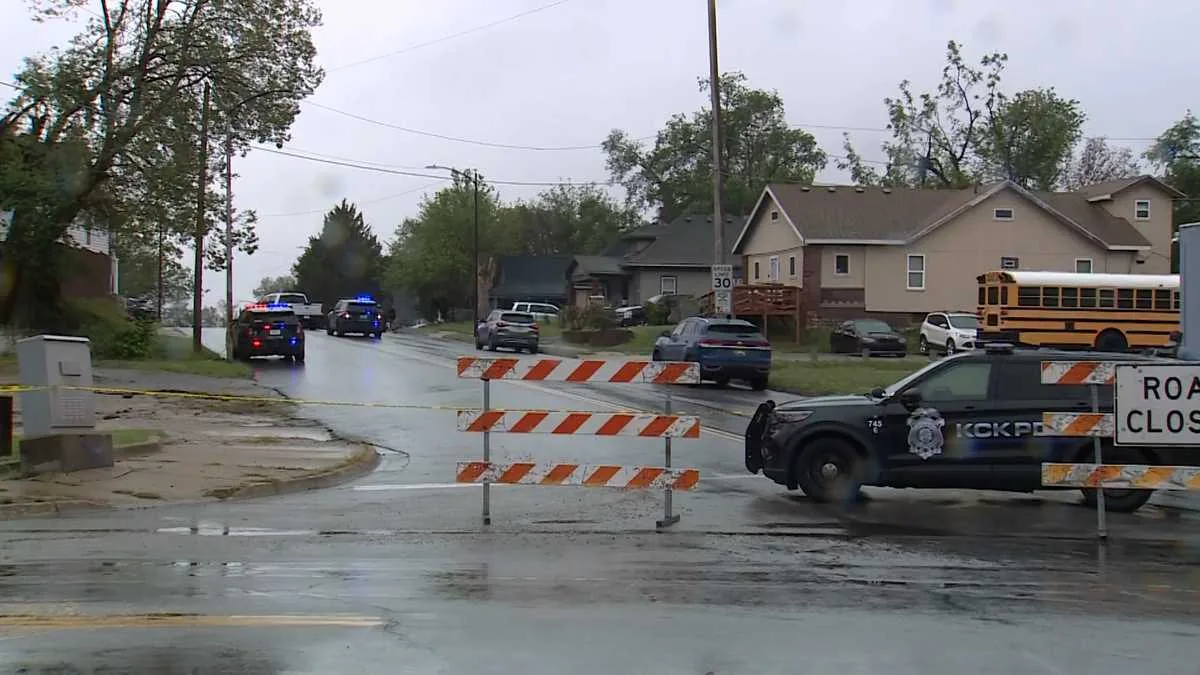
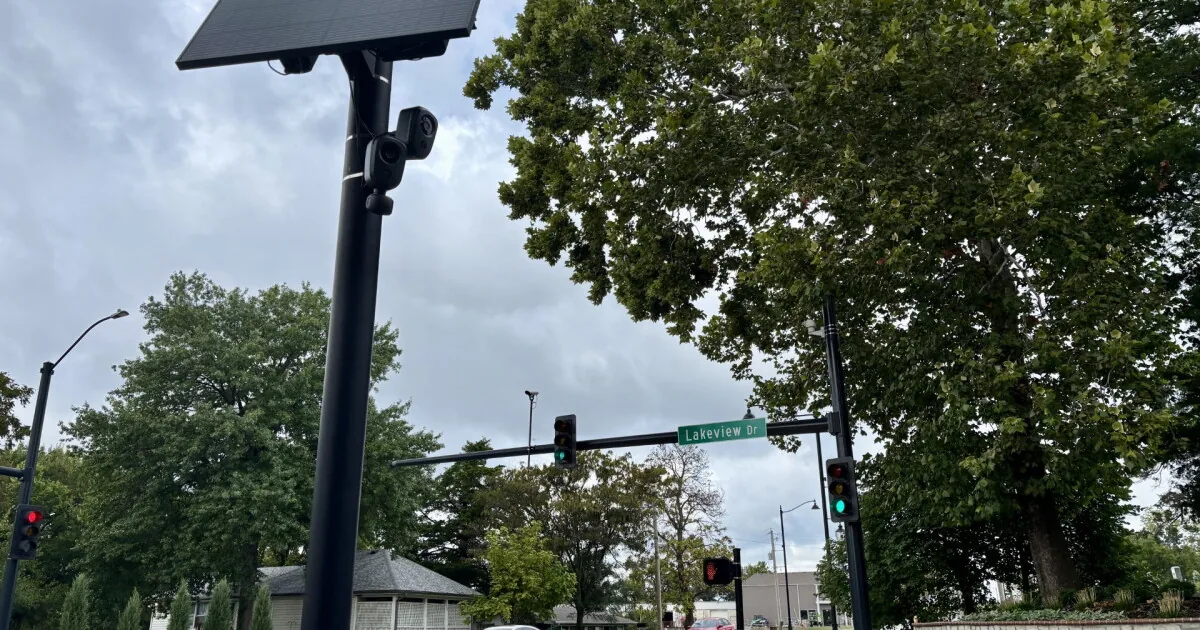
KANSAS CITY, KS — License plate reader data collected around Kansas City is being searched on a massive scale, and the numbers are fueling new questions about who can see it and why. A KCUR analysis of audit records found that Kansas City, Kansas, police Flock data was queried almost 1.1 million times in a single 30-day period this year.
The biggest search users were not local agencies. Police in Houston made the most queries, followed by Dallas and the California Highway Patrol, according to the records. Those three departments alone searched Kansas City, Kansas, data 198,000 times during the period KCUR reviewed.
Out-of-state departments drove most of the Kansas City, Kansas searches
The audit period ran from April 24 to June 24, and it showed Kansas City, Kansas, officers made 3,570 searches of their own Flock data. By comparison, agencies in California and Texas searched the same database hundreds of thousands of times.
The scale of access has become a central concern for privacy advocates, who say the system can follow people across city and state lines with little friction. Christie Hebert, an attorney with the Institute for Justice, said the cameras create a network that can track a vehicle nationwide.
Depending on traffic volume, a single camera location can capture as many as 2,000 license plates a minute, according to a Department of Justice study cited in the coverage.
Kansas and Missouri communities are pushing back on Flock cameras
Public concern has already changed policy in several nearby communities. After two hastily arranged town halls, Parkville, Missouri, temporarily shut off its 14 Flock cameras. Earlier this year, Weston, Missouri, canceled its contract for two cameras after residents pressed the city to back away from the system.
In Lee’s Summit, police last week adopted a more restrictive approach, saying they will no longer share locally collected data with any outside agency that cannot match their level of protection. The department now wants a memorandum of understanding with any law enforcement agency seeking access to its 55 cameras, and that agreement is still being written.
Micah Kubic, executive director of the ACLU of Kansas, said concern over the cameras has crossed ideological lines. He said people from different political perspectives are uniting around privacy protections and limits on surveillance.
Governor Kehoe’s order limits how Missouri police can use the data
Missouri Gov. Mike Kehoe also moved to tighten rules around automated license plate readers. His statewide executive order requires data to be purged after 30 days unless it is tied to an ongoing criminal investigation.
The order also bars vendors from selling the information and prohibits AI facial recognition from being included in license plate reader systems. Kehoe said the unchecked collection and indefinite storage of law-abiding citizens’ location data raises serious constitutional and privacy concerns.
The new limits reflect a broader argument made by critics: that license plate reader systems should serve narrow law-enforcement purposes, not become long-term location databases accessible far beyond the city where a car was seen.
Gladstone data drew even heavier use from Houston and Dallas
The KCUR review also looked at Flock audit records from Gladstone, Missouri, and found similar patterns. Houston and Dallas police were again the most frequent outside users, searching Gladstone data more than 725,000 times in the first six months of this year.
Louisville, Kentucky, was third with nearly 85,000 searches. The FBI also used Gladstone’s data 67,000 times between Jan. 1 and July 1.
The records were not identical from department to department, and some audit data were incomplete. For example, Lee’s Summit records did not show how many outside agencies made searches, limiting how fully the access patterns can be compared across cities.
Freeform searches and mistake cases are driving the privacy debate
Critics are especially wary of so-called freeform searches, which allow officers to search by broad descriptions instead of a specific plate number. In Kansas City, Kansas, auditors found 141 freeform searches. Examples included requests for a “male with black ski mask” and a “Buick/silver SUV with a sticker.”
Lee’s Summit records showed similarly broad searches, including “Honda/blue” and “sedan/silver-gray.” Privacy advocates say those searches show how the system can be used to sort through huge pools of data with little precision.
The Institute for Justice says license plate readers have been misused in a range of cases. Its incident list includes Kansas and Missouri examples, and a USA Today investigation found at least 22 officers nationwide have been arrested, fired or placed on leave over Flock misuse.
Supporters say the technology still helps solve serious crimes
Even many critics acknowledge that automatic license plate readers can help police find missing children or locate fleeing suspects quickly. That is why the debate has shifted less toward whether the technology should exist and more toward how tightly it should be controlled.
At a Parkville town hall, Police Chief Kevin Chrisman said the department has guardrails to prevent misuse and argued that people who are not doing anything wrong have nothing to fear. Privacy advocates strongly disagree with that framing, saying legitimate use does not erase the risk of overreach.
Christie Hebert said officers should generally need a judge’s approval before conducting broad searches, rather than deciding on their own to scan for large categories of vehicles. A later example in Sedgwick County, Kansas, showed the stakes: a Flock camera mistook a temporary plate for a permanent one in October 2023, and police held an innocent couple at gunpoint after believing the car was stolen.