
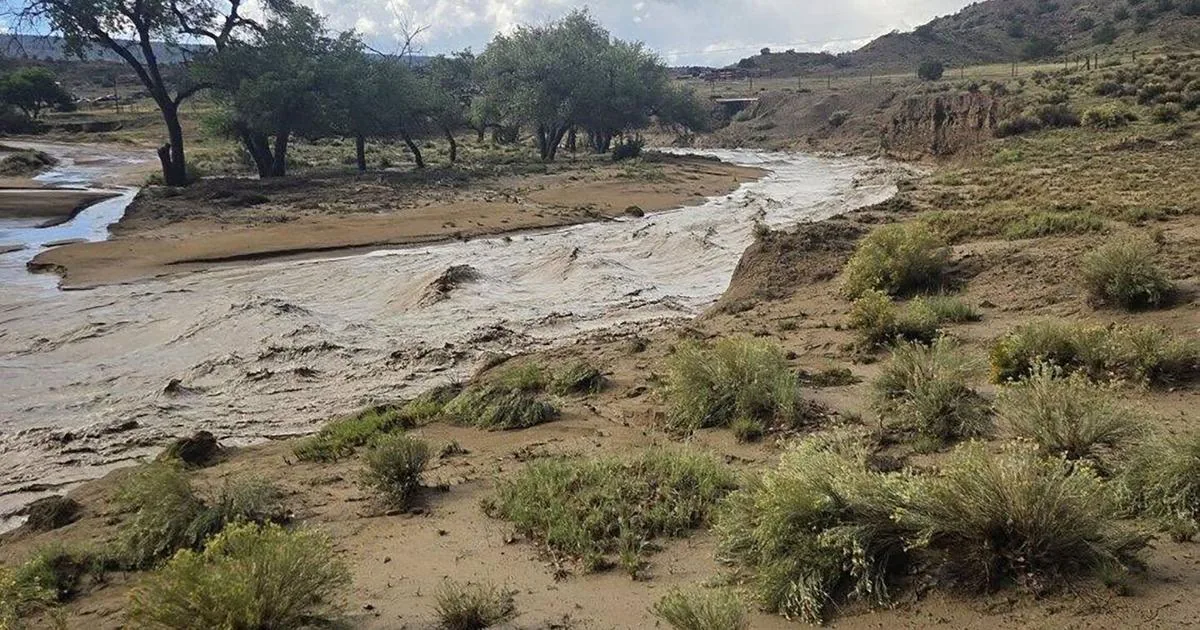
ALBUQUERQUE, NM — Flash flooding from unusually strong Southwest storms killed three people on the Navajo Nation in New Mexico and sent rescue crews into flooded neighborhoods in Arizona. The hardest-hit area in New Mexico was near Newcomb, where police said two adults and one juvenile were found after being washed away by floodwaters.
The deadly flooding came as parts of the region were dealing with rain far heavier than normal for September. In north-central Arizona, storms dropped more than a month’s worth of rain in just a few hours, while officials in the Phoenix area reported inundated roads, stranded vehicles and water rescues.
Authorities said the danger stretched across a wide swath of the Southwest, with more heavy rain still in the forecast even after some communities began to dry out.
Police say three people were found dead near Newcomb after overnight flooding
Officers responded at about 12:30 a.m. local time to a report that three people had been swept away by flooding near Newcomb, according to the Navajo Police Department. When officers arrived, they found two adults and one juvenile at the scene. All three were pronounced dead.
The department said it was not providing additional details about the deaths when contacted, citing concern for the family’s privacy. Navajo Nation President Buu Nygren later offered condolences in a social media post, saying there were no words to ease the pain of such a sudden loss.
Nygren said the nation’s thoughts were with the family, relatives and loved ones grieving the deaths. He added that the community would need strength and comfort in the difficult days ahead.
Newcomb saw rain build Tuesday afternoon and peak in a short, intense burst
Rain over Newcomb began Tuesday afternoon around 4:30 p.m. and continued on and off until just after midnight. The area received about 0.5 inches to 1 inch of rain overall, but most of it fell within roughly one hour Tuesday evening.
That kind of concentrated rainfall can quickly overwhelm dry ground and low-lying waterways in the desert Southwest. In this case, the sudden burst was enough to create dangerous flooding conditions near the community on the Navajo Nation.
The storm pattern was part of a broader round of unsettled weather that returned to the region later in the week. Officials said the same system that brought flooding to New Mexico also fueled severe rainfall in Arizona.
Arizona suburbs saw flooded streets, stranded cars and water rescues
Wednesday’s heaviest rain hit Arizona, where some of the worst flooding spared downtown Phoenix but hit surrounding suburbs hard. Officials reported submerged roads and stranded vehicles in Scottsdale and Mesa, where drivers needed help getting out of floodwater, according to CNN affiliate KPNX.
First responders were also called to a water rescue just south of Phoenix after a car became trapped in floodwater with two people inside, CNN affiliate KTVK reported, citing the Maricopa County Sheriff’s Office. The flooding created hazardous conditions for drivers across the metro area.
In Cave Creek, north of Phoenix, more than 3 inches of rain fell in just three hours. That was about triple the area’s average rainfall for the entire month of September.
Monsoon moisture and a Gulf of California disturbance strengthened the storms
The flooding unfolded during the Southwest monsoon, the seasonal period when shifting winds draw moisture into the region and help trigger thunderstorms. The monsoon typically lasts from mid-June through September, and the region is now in the final stretch of that season.
Weather conditions became even more favorable for heavy rain when a tropical disturbance moved into the region from the Gulf of California. That extra moisture helped intensify the downpours and contributed to the flood threat.
Scientists have long said that extreme rainfall is becoming more common as warming temperatures allow the air to hold more moisture. That can raise the odds of sudden, intense flooding when storms stall or repeatedly move over the same area.
Flood risk eases in Phoenix but stays in parts of the Southwest
Drier air ended the flood threat in Phoenix on Thursday, but forecasters said heavy rain would continue in Arizona north and east of the city, along with parts of New Mexico, Colorado and Utah. The region remained vulnerable even after the most intense storms moved through.
Officials said the heavy-rain threat would gradually weaken across the rest of the Southwest on Friday and Saturday as drier air spread. Even so, the earlier flooding showed how quickly conditions can turn dangerous during this part of the year.
The storm system left behind a trail of damage, emergency response calls and heartbreak across a wide area, from the Navajo Nation to the Phoenix suburbs.
A deadly reminder of how fast desert flooding can turn dangerous
The floods underscored a familiar but deadly risk in arid parts of the Southwest: storms can dump enough rain in a short period to turn dry washes, roads and low-lying areas into hazards within minutes. That threat is especially severe overnight, when visibility is low and rescue efforts can be more difficult.
In New Mexico, the loss of three lives on the Navajo Nation was the most tragic outcome of the storm system. In Arizona, it was the damaged roads, trapped vehicles and rescue calls that showed how widespread the danger became.
As the monsoon season winds down, officials and residents across the region are still facing the possibility of more downpours before the weather pattern finally shifts to drier conditions.
A deadly reminder of how fast desert flooding can turn dangerous
The floods underscored a familiar but deadly risk in arid parts of the Southwest: storms can dump enough rain in a short period to turn dry washes, roads and low-lying areas into hazards within minutes. That threat is especially severe overnight, when visibility is low and rescue efforts can be more difficult.
In New Mexico, the loss of three lives on the Navajo Nation was the most tragic outcome of the storm system. In Arizona, it was the damaged roads, trapped vehicles and rescue calls that showed how widespread the danger became.
As the monsoon season winds down, officials and residents across the region are still facing the possibility of more downpours before the weather pattern finally shifts to drier conditions.